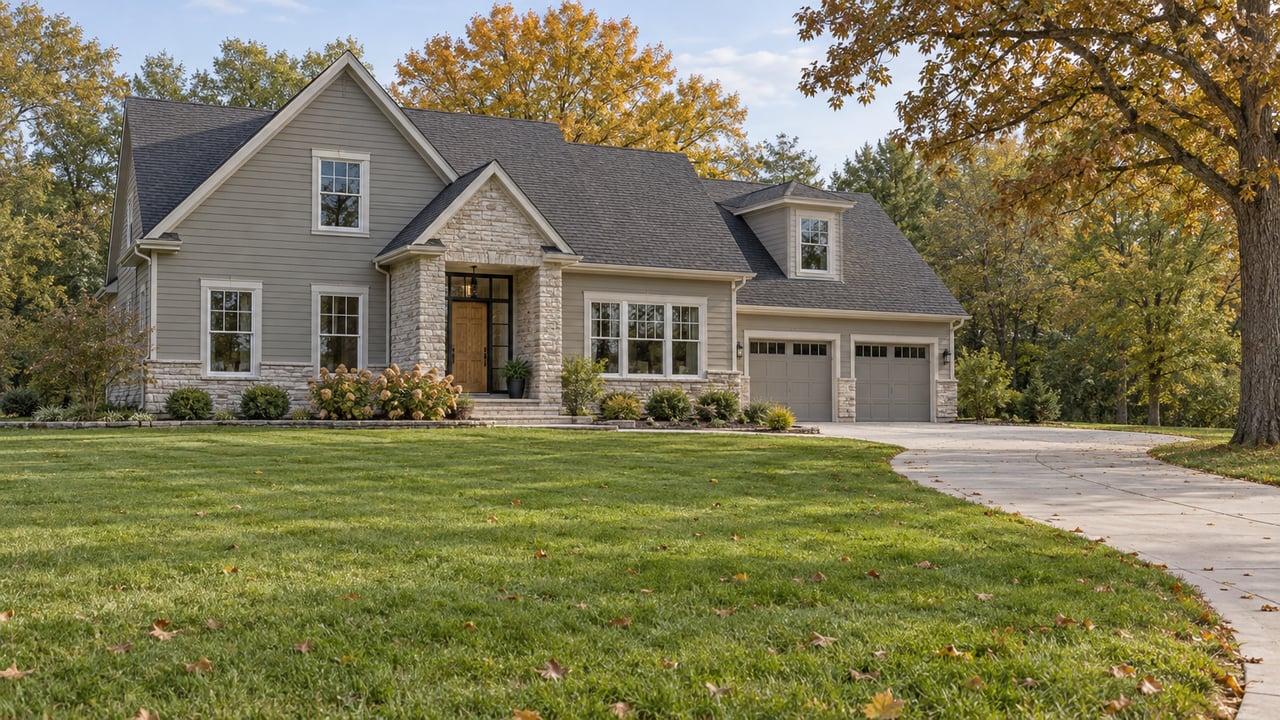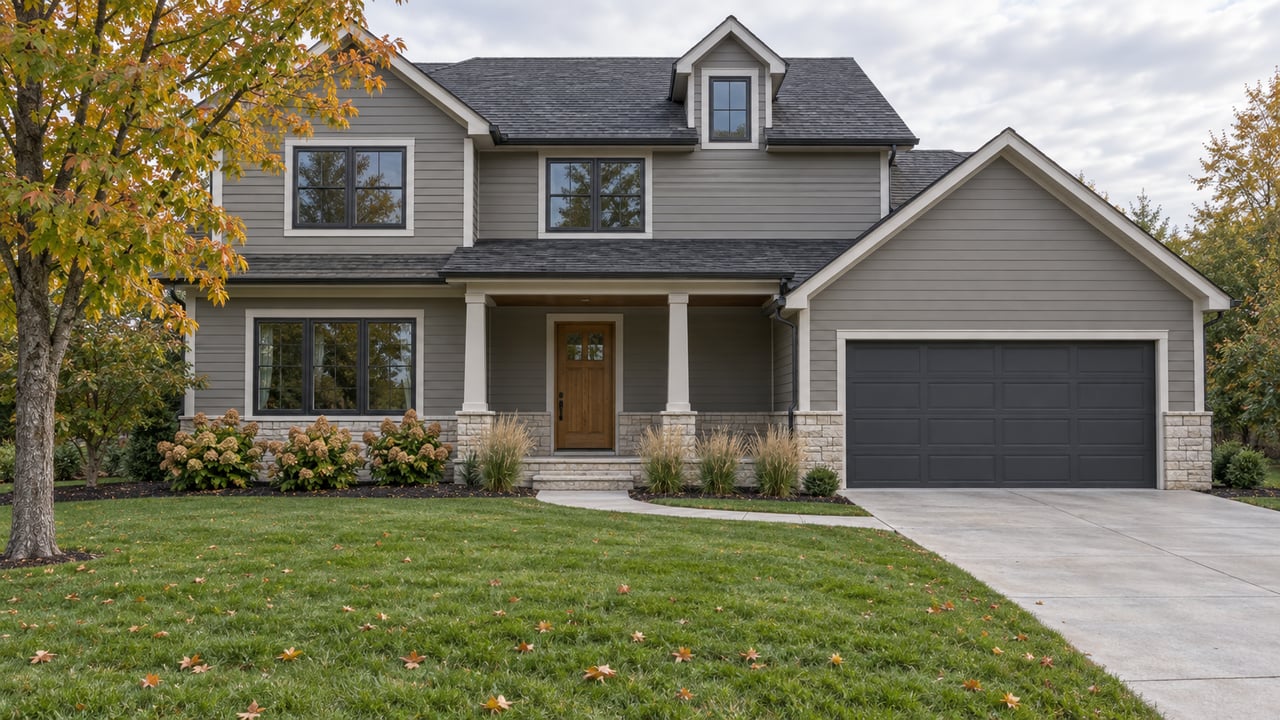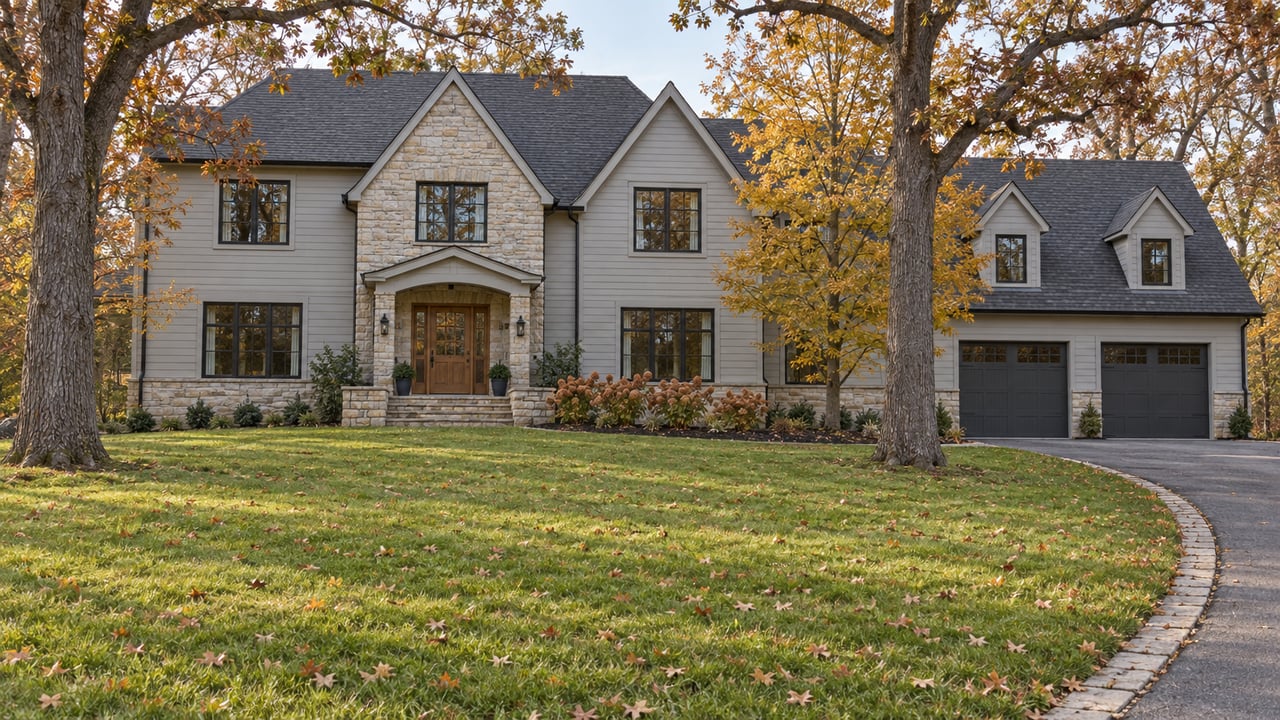
In the 12 months through September 2026, Sunfish Lake sellers received an average of 92.2% of their original list price. Across Dakota County the figure was 98.5%. That 6.3-point gap is the most useful number a buyer can bring to this city. On a home listed at $1.5 million, 92.2% leaves about $117,000 between the first asking price and the closing price. At the county's rate, the same listing would close only about $22,000 below its original ask.
Sunfish Lake's other headline numbers are less reliable. The median and the average moved in opposite directions this year, and both are built on very few sales. The list-to-sale gap is steadier. It has narrowed over the past year, but it is still wider than in any nearby market, and more homes are now listed than at any point in the comparison period.
Four Markets, One Table
The figures below come from the Minneapolis Area REALTORS® Local Market Update for Sunfish Lake, current as of October 7, 2026. The neighboring columns come from the matching reports for Mendota Heights, Dakota County and the 16-county Twin Cities region. All rows cover the rolling 12 months through September 2026, except months' supply, which is the September 2026 reading.
| Metric | Sunfish Lake | Mendota Heights | Dakota County | 16-County Metro |
|---|---|---|---|---|
| Percent of original list price received | 92.2% | 99.8% | 98.5% | 98.4% |
| Days on market until sale | 120 | 46 | 49 | 50 |
| Median sales price | $1,285,000 | $570,000 | $400,000 | $395,000 |
| Price per square foot | $356 | $245 | $198 | $217 |
| Months' supply, September 2026 | 7.3 | 4.1 | 3.4 | 3.2 |
Mendota Heights shares a border with Sunfish Lake. Over the same rolling 12 months, its sellers received 99.8% of original list, so homes there typically closed close to their asking price. In Sunfish Lake, a few minutes away, homes closed about eight points below.
Why the Median and the Average Disagree
Over the rolling 12 months through September 2026, Sunfish Lake's median sale price fell 17.1%, from $1,550,000 to $1,285,000. Over the same period the average sale price rose 26.5%, from $1,508,000 to $1,907,933. Price per square foot rose from $289 to $356. These figures all point in different directions because each one rests on very few sales.
The city recorded nine closed sales in that window and five in the year before. With nine sales, the median is simply the fifth one when they're lined up by price. The average adds all nine together, so one very high or very low sale can move it far more than it moves the median. With a sample this small, the median and the average can easily diverge without telling you much about what a typical Sunfish Lake home is worth.
September 2026 alone shows how much one transaction can move these figures. One home closed that month, at $499,900. That single sale became the month's median, its average and its only data point. The report itself warns that "activity for one month can sometimes look extreme due to small sample size." A buyer who sees $499,900 next to "Sunfish Lake median" on a portal is looking at one house.
The list-to-sale percentage holds up better because it compares each sale with that home's own original asking price. A $900,000 sale and a $3 million sale each produce a percentage that can be compared directly. Over nine sales, that ratio is a better measure of how firm asking prices have been than any dollar figure.
The Gap Is Narrowing, and Supply Is Growing
Sunfish Lake's discount was larger last year. In the 12 months through September 2025, sellers received 85.7% of original list and homes took 223 days to sell. A year later those figures are 92.2% and 120 days. Pricing has moved closer to where buyers are actually paying, and homes are selling in about half the time.
Supply has grown in the same period. New listings rose from 9 to 23 over the rolling 12 months. Inventory in September 2026 was 10 homes, compared with 5 a year earlier. Months' supply went from 3.8 to 7.3. At September's pace, the city has more than twice as much supply as the metro's 3.2 months.
These two trends work against each other. Sellers are pricing closer to the market, and homes are selling faster than they did a year ago. At the same time, there are more homes to choose from, so each listing competes with more alternatives. In a city this small, ten homes on the market is a significant number. A buyer who reads 120 days as a fast market is comparing it with last year's 223. Measured against the county's 49 days, Sunfish Lake still sells slowly, and that slower pace leaves more room to negotiate.
A Cost That Shows Up at Closing
Part of what a buyer negotiates in Sunfish Lake never shows up in a market report. Homes here run on private septic systems, and the city code limits when a property can be sold. Under the Sunfish Lake City Code, a property served by an existing septic system cannot be sold or transferred unless a compliance inspection has been done and a certificate of compliance issued. For systems older than five years, that must have happened within three years before the sale. For newer systems, the window is five years. The inspection is done by a licensed business hired by the system owner, and the seller must also provide the septic disclosure required by Minnesota Statutes section 115.55.
If a seller cannot provide the certificate, the code requires the seller to give the buyer security in the form of an escrow agreement to ensure a compliant system is installed. The escrow can be held by a licensed real estate closer, a licensed attorney, or a federally or state-chartered financial institution. The amount is 125% of a licensed installer's written estimate or 110% of a written installation contract. The city's April 2026 septic pumping reminder states that residential systems must be pumped every three years. It also asks residents to have their pumper send the report to Dakota County Environmental Services.
In a market where the typical sale already closes well below the original ask, a missing certificate or an escrow holdback can widen the gap further. This post is general information rather than legal or financial advice. A buyer or seller should confirm how these requirements apply to a specific property with the city, a licensed septic professional and their own attorney.
What the Land Allows Now
Under the new zoning code, a Sunfish Lake lot can be used in more ways than before. On December 9, 2025, according to the council minutes, the City Council adopted Ordinance No. 25-12, which repealed and replaced the city's zoning ordinance. The city's summary of the new ordinance describes three changes that matter to a buyer.
- Building is simpler. The residential site-plan process was eliminated, so residential construction now requires only a building permit application. Variances and conditional-use permits still apply where they are needed.
- A second living space is permitted. Accessory dwelling units are now a permitted use in the R-1 district when accessory to a single-family home. Under the code section, an ADU can be no larger than half the main home's finished square footage or 1,200 square feet, whichever is less. The home's front can have no more than one visible door, and the ADU must meet living-space setbacks. The city's summary says the ADU must be accessory to the home itself and not to a detached garage.
- Horseshoe Lake setbacks were reduced. For Horseshoe Lake only, the shoreland setback dropped from 200 feet to 100 feet for buildings and from 150 feet to 75 feet for septic systems.
The minimum lot size did not change. R-1 lots still need 2½ acres of net area and 200 feet of width at the front setback line.
A subdivision approved this summer shows how much work goes into a new lot. In July 2026 the council approved splitting an undeveloped parcel into two residential lots. The parcel's net acreage was well under half its gross acreage. Both lots will be reached by a shared driveway within a private-road easement, with no new public street. Each lot has its own designated septic area and well location. The approval also requires 82 replacement trees within five years, and future owners will be notified of the planting obligation.
More changes are coming. As of October 7, 2026, WSB staff had begun drafting the chapters of Comp Plan 2050, according to the city planner's report, and the Planning Commission is expected to review them in the new year. The separate subdivision ordinance is scheduled for review in 2027. On roads, the council chose not to spend a quoted $63,000 on a high-friction surface at Salem Church Road and Delaware. Instead it will rely on a 2027 chip seal using aggregate chosen to improve skid resistance.
Questions Buyers Ask About Sunfish Lake
Did Sunfish Lake prices fall to around $500,000 in September 2026? No. One home closed that month, at $499,900. The rolling 12-month median through September 2026 was $1,285,000, based on nine sales.
Does building a home in Sunfish Lake still require a site plan review? Under Ordinance No. 25-12, residential construction moves forward with a building permit application, and the former residential site-plan step is gone. Variances or conditional-use permits still apply where the code requires them.
Who orders the septic compliance inspection before a sale? The city code says the inspection is performed by a licensed inspection business hired by the system owner.
Can an ADU be built above a detached garage? The city's summary of the new code says an ADU must be accessory to the single-family home and not to a detached garage.
If you're weighing a Sunfish Lake property, I'm glad to go through the recent sales with you. We can look at how each one compared with its original asking price and check the home's septic certificate and zoning details before you make an offer. Let's connect through Jen Azure whenever you're ready.